
A recurring pattern: Haiti misread, punished, and politically orphaned

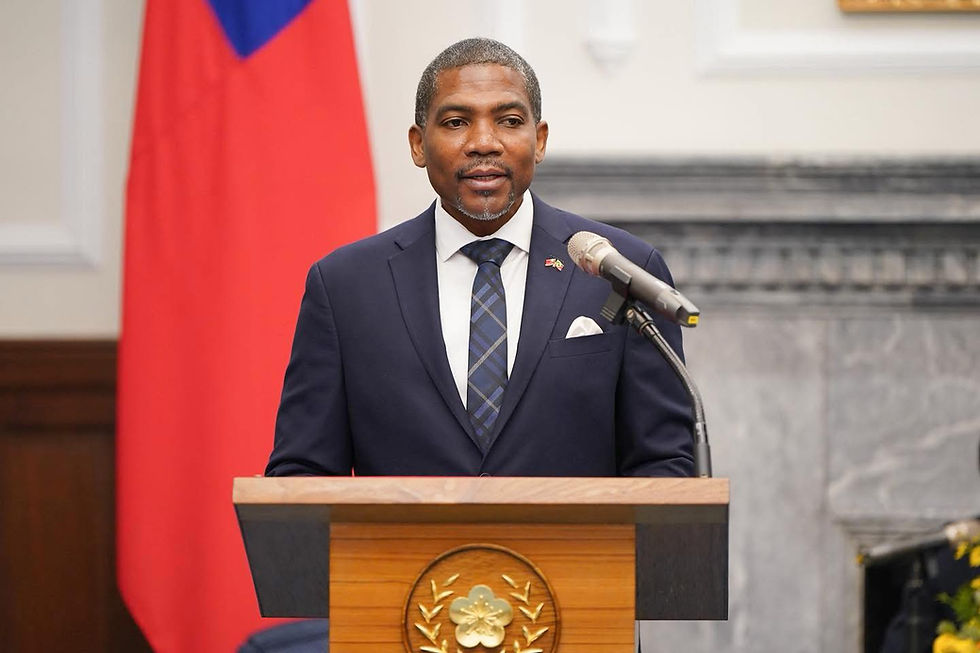
Here we go again. A small Caribbean state—one whose population is roughly 50,000—finds itself in a position to publicly distance itself from Haitians, while Haiti, the region’s most symbolically consequential nation, is treated as a problem to be managed rather than a people to be respected. Reports in the international press suggest that new migration-related agreements are being negotiated in the Caribbean, accompanied—explicitly or implicitly—by the message that Haitians are not welcome. Whether stated bluntly or coded through policy, the effect is the same: Haiti becomes a convenient object of exclusion.
This moment is not simply about migration. It is an illustration of a deeper, older story: Haiti has long been mistreated and misunderstood—often by powerful empires, but increasingly also by neighbors, including societies that were themselves shaped by colonial domination. In the regional arena, this is made even more troubling by the political theater in which Haitian actors have repeatedly sought legitimacy through external “frameworks,” while failing to build credible internal legitimacy and coherent national direction.
Why Haiti has been “punished” since birth
Haiti’s revolution was not merely anti-colonial; it was anti-slavery—and therefore a direct threat to the Atlantic order of plantation capitalism. From the earliest years after independence, the dominant powers of the day treated Haiti as a dangerous precedent rather than a legitimate state. Haiti’s political isolation and economic strangulation were not accidents; they were instruments.
A core fact remains historically decisive: the 1825 indemnity imposed by France, demanding compensation for former enslavers and “lost property,” locked Haiti into a predatory financial relationship that drained public resources for generations. Scholars widely recognize this as one of the most consequential structural shocks to Haiti’s state-building capacity (Dubois, 2012; Farmer, 2003). In effect, Haiti was forced to pay for its own freedom in a world economy that punished Black sovereignty.
Michel-Rolph Trouillot described the broader logic bluntly: Haiti became “unthinkable” to the colonial imagination—not because it was irrational, but because it violated the worldview of racial hierarchy (Trouillot, 1995). That “unthinkability” has echoed forward into modern diplomacy and media narratives: Haiti is too often framed as a perpetual failure, not as a nation historically engineered into vulnerability.
The “Haitian exception” and the politics of stigma
Haiti’s mistreatment is also tied to a longer arc of racialized stigma. Even in the 20th century, Haiti was subjected to externally justified “stabilization” and “modernization” projects that undermined sovereignty while cultivating dependency. The U.S. occupation (1915–1934) is a prime example: it reorganized institutions and finances, but it also entrenched coercive governance and reinforced the idea that Haiti required tutelage rather than partnership (Renda, 2001; Schmidt, 1995).
This history matters because it helps explain a painful present truth: holding a Haitian passport today often feels like carrying an inherited global suspicion. Haitians are rejected, profiled, and treated as portable risk—often regardless of their individual merits, skills, or legal status. This is not only a Haitian tragedy; it is evidence of how colonial logics survive in the moral vocabulary of international affairs.
Why some postcolonial societies reproduce anti-Haitianism
A difficult irony is that anti-Haitian sentiment is not confined to former imperial centers. It appears in regional spaces, including some states with their own histories of colonial subordination. This is partly because postcolonial nationalism frequently seeks unity by manufacturing an “other.” When governance is fragile and economies are stressed, scapegoating becomes politically useful.
In the Dominican Republic, anti-Haitianism has deep historical roots and has been repeatedly institutionalized through law, policy, and national mythology (Sagás, 2000). In parts of the wider Caribbean and even broader international forums, Haiti can become a symbol against which other states perform “order,” “modernity,” or “eligibility” for Western partnership. In sociological terms, this is a politics of respectability at the expense of solidarity.
Frantz Fanon warned that colonial hierarchies do not vanish when the flag changes; they can be internalized and reproduced—what he analyzed as the psychic and political afterlife of domination (Fanon, 1952/2008). In that sense, the rejection of Haitians by postcolonial neighbors can be interpreted as a tragic replay of colonial sorting: distancing oneself from Blackness, poverty, and “disorder” to gain proximity to power.
The leadership vacuum inside Haiti: no vision, no legitimacy, no shield
Yet it would be dishonest to blame only outsiders. Haiti’s external vulnerability has been amplified by the incapacity of Haitian political leadership to build a credible national project—one strong enough to reduce dependency, professionalize institutions, and make sovereignty more than a slogan.
Across decades, Haitian politics has too often been organized around personal power, extraction, and short-term bargains, rather than public service, institutional design, and national planning. Corruption is not merely an ethical failing; it is a strategic failure: it weakens the state’s bargaining position, invites foreign “mediation,” and leaves the population exposed to both domestic predation and international contempt.
When a political class repeatedly seeks external validation while neglecting internal legitimacy, it teaches the world to treat Haiti as governable only from outside. That is how a nation becomes administratively managed rather than respectfully engaged.
Jean-Jacques Dessalines understood that independence without dignity is incomplete. In the Haitian political tradition, Dessalines symbolizes not nostalgia but a standard: sovereignty requires discipline, unity, and institutions that protect the people, not factions. When today’s leaders fail to meet that standard, Haiti becomes easier to vilify—and harder to defend.
What this moment demands
If Caribbean states are entering agreements that effectively “export” Haitian asylum seekers, Haitian civil society and intellectual leaders must respond with clarity:
• Demand transparency: What are the terms, safeguards, and legal pathways for Haitians?
• Challenge regional double standards: Why is Haitian mobility framed as a threat rather than a shared humanitarian responsibility?
• Name the structural causes: Haiti’s crisis is inseparable from historic extraction, foreign interference, and domestic governance failure.
• Most importantly: rebuild internal legitimacy—because no country can negotiate with dignity abroad while collapsing at home.
The painful conclusion is this: Haiti is simultaneously over-intervened in and under-respected. The remedy is not performative outrage; it is organized civic power, institutional rebuilding, and a national narrative strong enough to resist stigma.
References
• Dubois, L. (2012). Haiti: The Aftershocks of History. Metropolitan Books.
• Fanon, F. (2008). Black Skin, White Masks (R. Philcox, Trans.). Grove Press. (Original work published 1952)
• Farmer, P. (2003). The Uses of Haiti. Common Courage Press.
• Renda, M. A. (2001). Taking Haiti: Military Occupation and the Culture of U.S. Imperialism, 1915–1940. University of North Carolina Press.
• Sagás, E. (2000). Race and Politics in the Dominican Republic. University Press of Florida.
• Schmidt, H. (1995). The United States Occupation of Haiti, 1915–1934. Rutgers University Press.
• Trouillot, M.-R. (1995). Silencing the Past: Power and the Production of History. Beacon Press.


Comments