
The Root of Our Ruin: A Plague We Can No Longer Ignore

Updated: Feb 16
Isn’t it time we, as Haitians, wherever we live, undertake a serious collective introspection?
We often speak of the political instability in Haiti as if it were disconnected from deeper historical patterns, as if corruption were simply a feature of modern mismanagement. But the truth is far more troubling. Corruption has been a chronic and defining thread throughout Haiti’s history—from its inception as the world’s first Black republic to its contemporary struggles with governance, both at home and across the diaspora.
The connection between our collective mentality and the colonial reflex is real and unrelenting. The trauma of slavery, dispossession, and foreign occupation did not end in 1804. It mutated. It calcified into institutions. And it left behind a transgenerational legacy that continues to influence our behavior and expectations. What was once imposed through domination is now, too often, perpetuated by our own hands.
Consider this fact: in Haiti’s entire post-independence history, the only high-profile corruption trial that was ever seriously pursued was “Le Procès de la Consolidation” in the early 1900s. That case involved the embezzlement of national funds through the fraudulent consolidation of public debt—a scandal so large that it could not be ignored. And yet, over a century later, despite countless accusations, exposés, and reports of theft at the highest levels, no other Haitian government has faced true judicial reckoning for systemic corruption.
Since then, accusations have only grown in scale and complexity: from the squandering of PetroCaribe funds to scandals involving public contracts, customs fraud, and international aid mismanagement. According to Transparency International’s 2023 Corruption Perceptions Index, Haiti ranked 171 out of 180 countries, placing it among the most corrupt nations in the world. This isn’t simply an institutional failure—it’s a societal one. Corruption has become a default setting, an expectation so ingrained that integrity is met with suspicion.
And tragically, this culture of corruption has followed us into the diaspora.
One would think that distance from Haiti’s broken systems, access to better institutions, and immersion in societies governed by rule of law might change this narrative. But that’s not what we’re seeing. Over the past two decades, the Haitian community in the United States has witnessed a disturbing number of corruption and fraud cases involving elected officials, nonprofit leaders, and businesspeople.
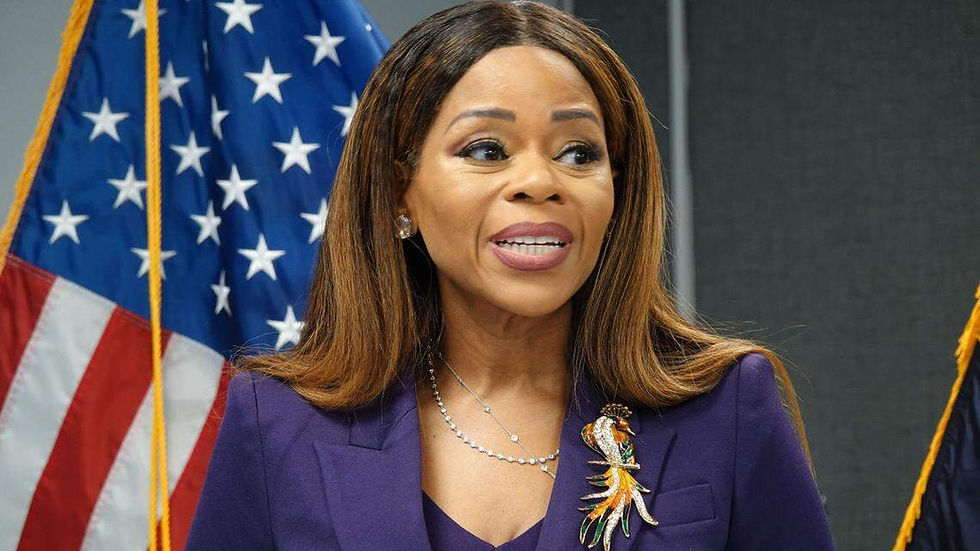
In 2012, Manuel Céant, a Haitian-American businessman, was convicted in Miami for orchestrating a multimillion-dollar Ponzi scheme that defrauded fellow Haitians. In 2015, Evens Cadet, a former Florida city employee of Haitian descent, was arrested for accepting bribes tied to procurement contracts. And just recently, Congresswoman Sheila Cherfilus-McCormick, a trailblazing Haitian-American elected to the U.S. House of Representatives, has come under federal investigation for alleged campaign finance irregularities and misuse of public funds. While no charges have been filed as of this writing and we must withhold judgment, the damage to public trust, especially in a community already weary of broken promises, is profound.
This is not just about isolated incidents or bad actors. It reflects a dangerous collective disillusionment—a belief that power inevitably leads to corruption, and that anyone who rises must be compromised. I experienced this firsthand when I campaigned for state office in Florida. Upon entering a Haitian barbershop to introduce myself, I was met with cynicism and sarcasm: “Men volè yo ankò, vin mande vot!”—Here come the thieves again, asking for votes. I was stunned. My life’s work has been in mental health, with no political baggage. But simply by being a candidate, I was presumed guilty. In our collective psyche, corruption has become not just a possibility, but an expectation.
And perhaps most heartbreaking of all is when Haitians exploit their own. In New York, Florida, Boston, and Montreal, there are countless cases—some public, many silent—of Haitian immigrants being defrauded by compatriots posing as immigration experts, housing brokers, pastors, or nonprofit leaders. Vulnerable families have lost life savings, homes, and immigration opportunities at the hands of people who look like them and speak their language. The betrayal cuts deep. These victims are not only battling systemic discrimination and socio-economic precarity, they’re also being preyed upon from within.
This is a painful truth, but one we must confront.
We cannot build a future grounded in justice, dignity, and prosperity if we do not address the rot within. We cannot speak of Jean-Jacques Dessalines and independence while ignoring that one of the reasons he was assassinated was his fierce stand against corruption and elite betrayal. What he died resisting has metastasized through generations.
So what do we do?
First, we must reject the normalization of corruption—in our speech, our actions, and our expectations. We must hold our leaders accountable, whether they govern in Port-au-Prince or Washington, D.C. We must teach our children that integrity is strength, not weakness. And we must elevate those within our communities who serve quietly, ethically, and with love—those who resist the seductive pull of shortcuts and power for power’s sake.
Second, we must invest in ethical, community-based leadership that centers justice, healing, and structural reform. That means backing candidates with vision and principle—not just charisma. It means supporting independent media, transparency in nonprofit work, and public education that highlights civic responsibility.
Lastly, we must engage in collective psychological repair. We cannot address systemic corruption without addressing the trauma that fuels it. Generations of dispossession, instability, and learned helplessness have created fertile ground for dysfunction. Healing our political culture requires healing our emotional one as well.
The story of Haiti is not yet finished. But it cannot continue like this.
Let us rethink who we are—not in abstract pride, but in courageous truth. Let us build something better, not just for ourselves, but for the generations who will one day ask what we did with this moment.


Comments